
Ramsey Local
Attic Venting Installation in Ramsey
Balanced intake and exhaust systems that protect your roof warranty and your energy bills.
Request an estimate
Tell us what you need
- 34 Years
- Experience
- Est. 2000
- Ambassador Building Company, Inc.
- MN & IA
- MN License # BC810034
IA Contractor Reg. # C152753
Attic Venting Installation: Ramsey's Climate Demands It
Ambassador Exteriors installs attic venting systems for homeowners in Ramsey and throughout the northwest metro, and has since 2000. An unvented or under-vented attic is one of the most reliable ways to void a shingle manufacturer's warranty, accelerate deck deterioration, and drive up heating and cooling costs simultaneously. If your home is showing signs of ice dams in winter or shingle blistering in summer, the attic is usually where the problem starts. Call Mike's crew at (763) 280-4920 before the next season makes it worse.
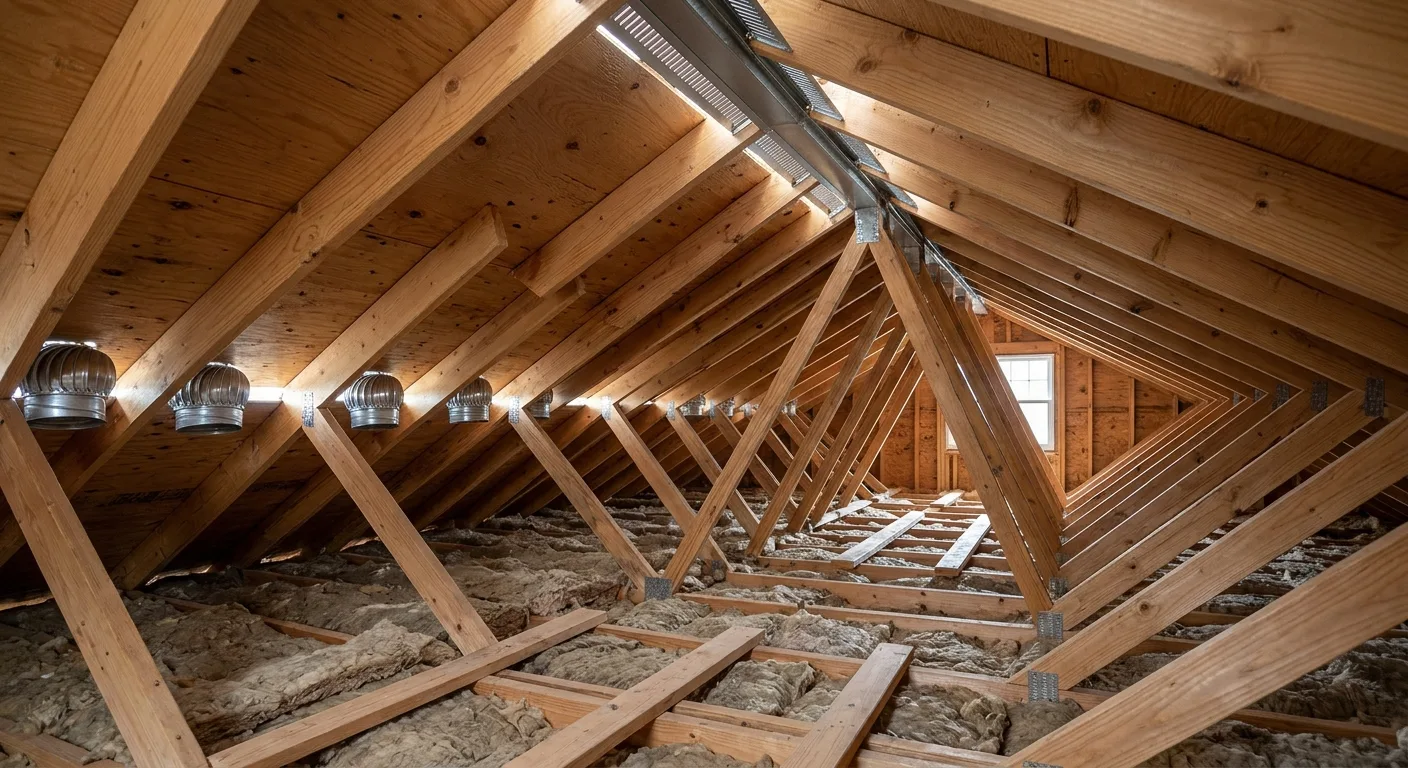
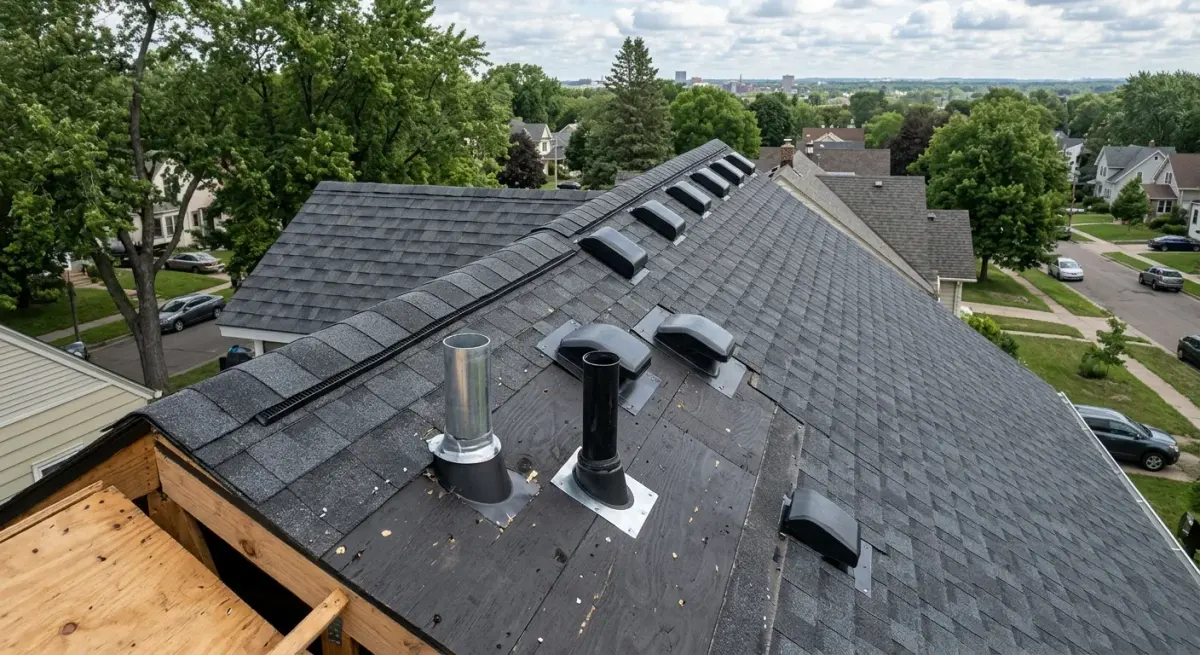
A properly balanced ventilation system requires equal net-free area between intake (typically soffit vents) and exhaust (ridge vents or box vents near the peak). We calculate both sides of that equation before any material is ordered, because an attic that exhausts more than it intakes creates negative pressure, which can actually pull conditioned air out of the living space and accelerate moisture infiltration into the deck. What changes the cost: roof pitch, existing vent penetrations, the depth and condition of existing insulation baffles, and whether the soffit has adequate material to accept net-free-area intake. We don't quote a number until we've walked the attic. Every job is different. Contact Ambassador Exteriors for an accurate estimate.
What attic venting installation involves
- Full attic assessment: intake, exhaust, net-free area, baffle condition
- Balanced system design matched to your roof's square footage
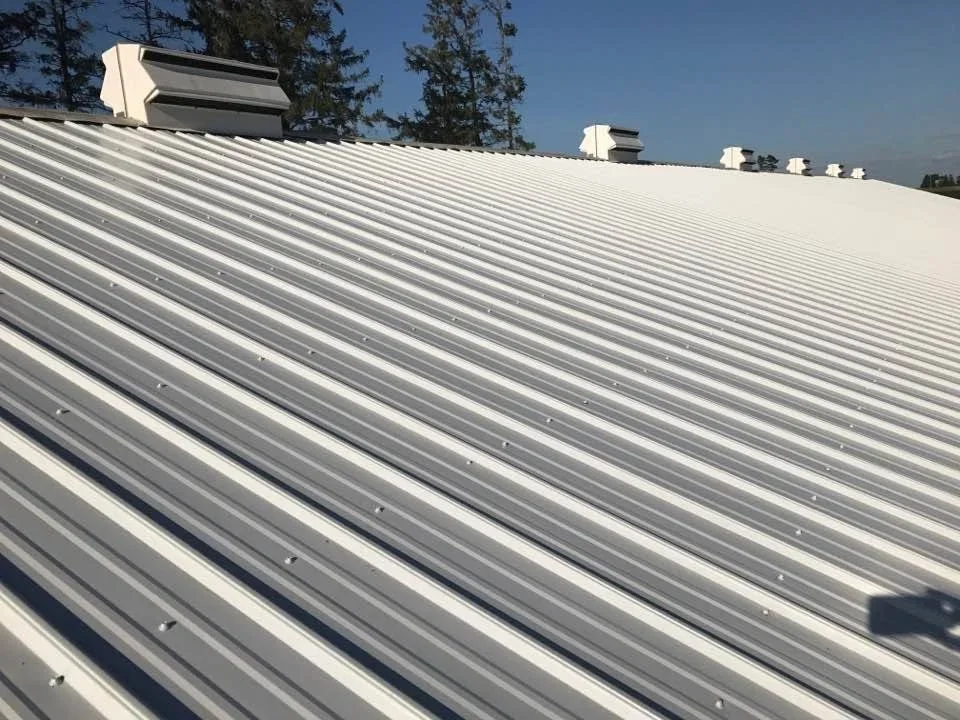
- Ridge vent, box vent, or power vent installation to code
- Soffit intake correction when existing vents are blocked or undersized
- Final inspection confirming ventilation equilibrium before we leave
Why it matters
What a failed ventilation system actually does
These are the four failure modes we diagnose most often on Minnesota homes.
Shingle warranty voidance
Most asphalt shingle manufacturers, including GAF and CertainTeed, require a balanced ventilation system as a condition of their product warranty. An attic that runs hot because exhaust exceeds intake, or one that traps moisture because there is no exhaust at all, gives the manufacturer grounds to deny a claim on premature shingle failure.
Thermal shock to shingles
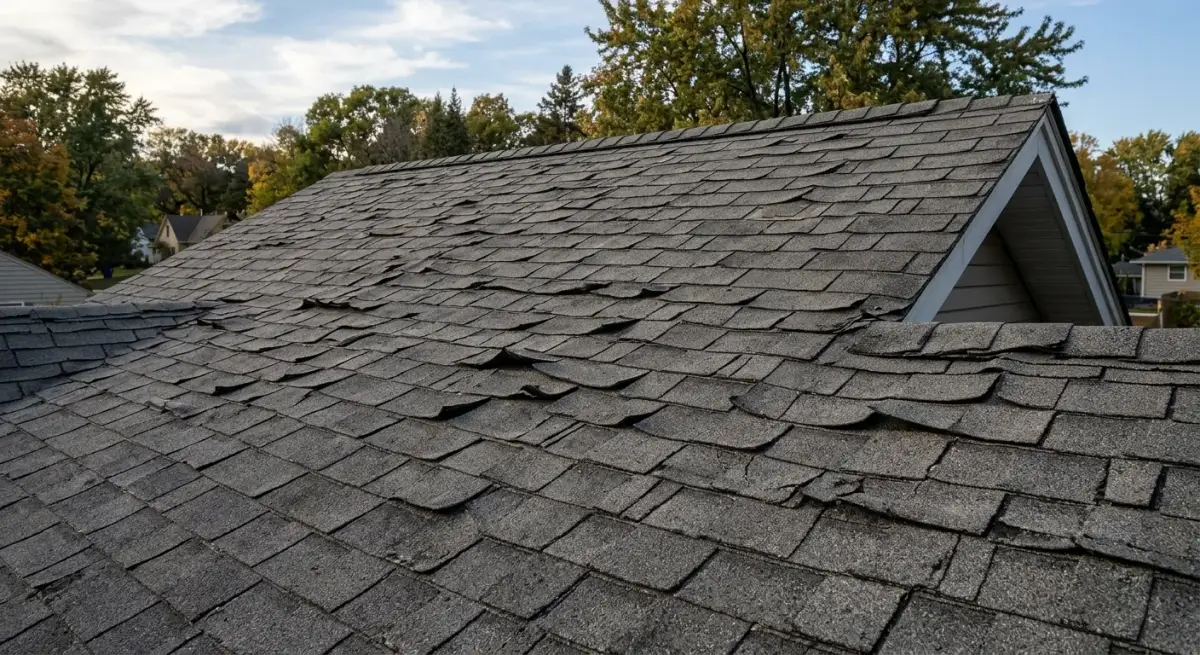
An unvented attic in a Minnesota summer can reach 150 degrees Fahrenheit or higher. That heat radiates through the deck and into the shingles, accelerating the loss of protective granules and causing the asphalt matrix to blister and crack years ahead of its rated lifespan.
Ice dam formation
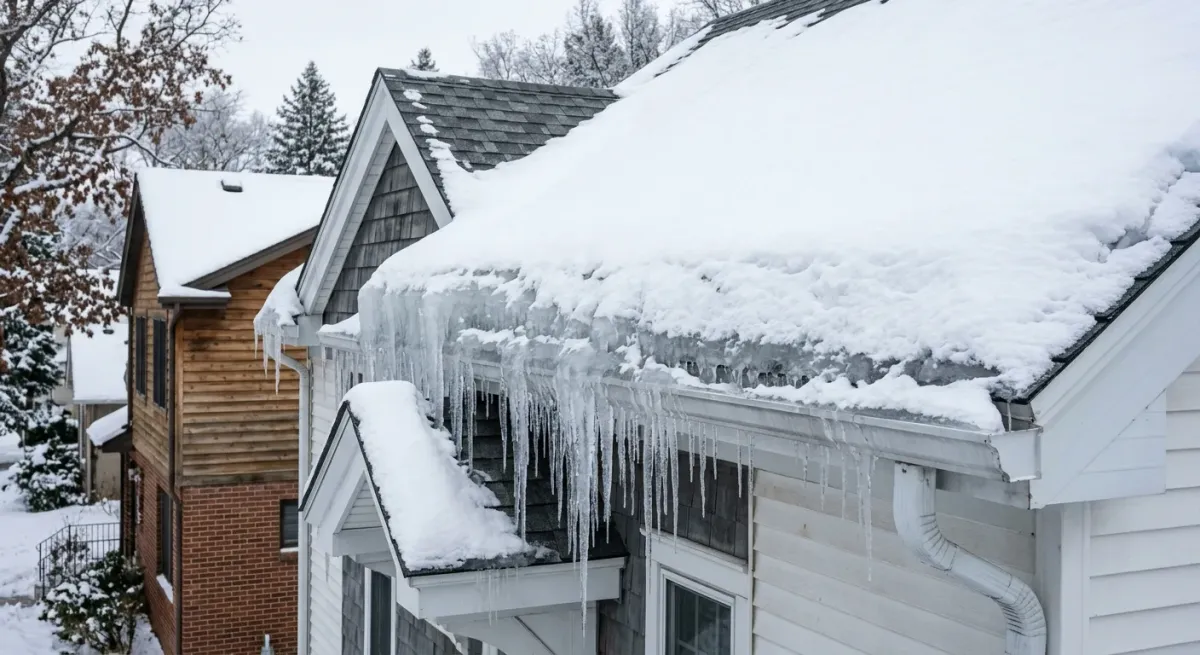
In winter, a warm attic melts snow at the roof deck and refreezes it at the cold overhang, building up the ice dams that force water under shingles and into the structure. Proper ventilation equilibrium keeps the deck temperature uniform, which is the only reliable way to prevent ice dam formation at the source.
Moisture infiltration and rot
Warm indoor air carries moisture vapor. Without adequate exhaust, that vapor condenses on the cold roof deck and rafters through the winter months, feeding mold and causing the structural wood to soften over time. By the time it is visible from inside the home, the repair scope is significantly larger than the ventilation fix would have been.
Our approach
Balanced systems, not just more holes in the roof
Our Process
How attic venting installation works
- 01
Attic assessment
Mike's crew inspects the attic space directly: existing vent type and placement, net-free area of current intake and exhaust, insulation baffle condition, and any signs of existing moisture damage or thermal stress on the deck boards.
- 02
System design and material selection
We calculate the required net-free area for both intake and exhaust based on your attic floor square footage, then specify the correct vent type and quantity. Ridge vents, low-profile box vents, and power-assist units each have the right application; we select based on your roof geometry, not on what's cheapest to install.
- 03
Installation and verification
Penetrations are flashed to code and sealed against moisture infiltration. After install, we verify airflow balance before closing up. If a roof inspection is already on the schedule, venting corrections are most efficiently addressed at the same time.
Attic venting: questions we answer on every job
What happens if your attic is not vented?
How much does it cost to install an attic vent?
Do I need attic baffles in every rafter bay?
What are common mistakes when venting an attic?
Can you have too much venting in your attic?
How far should a roof vent stick out of the roof?
Does attic ventilation affect my shingle warranty?
Serving Ramsey and the northwest metro
Ambassador Exteriors serves homeowners across Anoka County and the surrounding northwest metro communities. If your address is in this region, Mike's crew can be there.
In the field
A look at our work
Get the ventilation assessment right the first time
34 years in the trade. Licensed in Minnesota (BC810034). One owner, one crew, one phone number.
Related
Next step
Tell us about the job
Your name, your number and what needs doing. A person from Ambassador Exteriors gets back to you.
Rather talk now?(763) 280-4920mike@ambassadorexteriors.com