
Owner-operated · Est. 2000 Mon-Sat: 8am-5pm · Sun: Closed Ramsey (763) 280-4920
Vinyl Siding Installation in Ramsey

Ramsey Local

Vinyl Siding Installation in Ramsey

Licensed, code-compliant installation built for Minnesota's freeze-thaw seasons, by a contractor with 34 years in the exterior trade.

Request an estimate

Tell us what you need

No obligation


By submitting this form you agree that we may contact you about your request and share your name and email address with partner companies for email marketing. We never share your mobile number or text message consent with third parties or affiliates for marketing or promotional purposes.

34 Years
Experience
Est. 2000
Ambassador Building Company, Inc.
MN & IA
MN License # BC810034
IA Contractor Reg. # C152753

Vinyl Siding Done Right for Ramsey Homes

Vinyl siding installation in Ramsey is what Ambassador Exteriors does, and Mike Goldenstein has been doing this kind of exterior work since 1992. If your home's siding is failing, faded, or just past its useful life, the question isn't whether to replace it. The question is whether the contractor installing it understands what goes underneath it. That's where most jobs go sideways. Call (763) 280-4920 and talk directly with Mike.

What drives the cost and longevity of a vinyl siding job is rarely the material itself. It's the substrate condition, the water management details, how the flashing is handled at windows and corners, and whether the panels have enough room to expand and contract through a Minnesota winter. Vinyl moves. Nail it too tight and it buckles in July. Leave the moisture barrier wrong and you're pulling the whole thing off in five years. Every job is different. Contact Ambassador Exteriors for an accurate estimate.
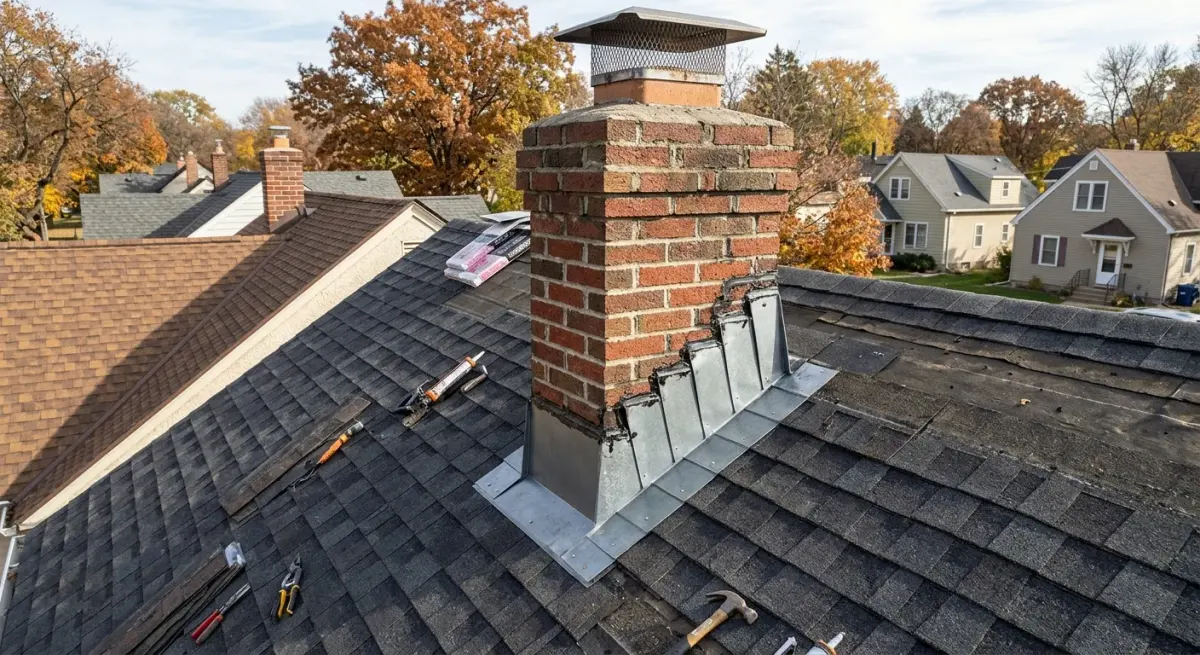
Roofer's aerial view of residential roof with brick chimney, metal flashing installations around vent pipes, and roofing tool

What Professional Vinyl Siding Installation Covers

  • Full inspection of existing substrate before any material goes on
  • Removal of old siding and repair of any rotted or damaged sheathing
  • Moisture barrier and house wrap installed before the first panel
  • Panels nailed to allow thermal expansion, not locked tight
  • Flashing at all windows, doors, corners, and penetrations
  • Cleanup and final inspection by the same crew that installed it

What Goes Under It

The Layers That Make Siding Last

Most competitors skip the explanation. Here's what actually goes on before the first panel.

Sheathing Inspection

Before anything else, we check the existing sheathing for rot, moisture damage, and structural integrity. Installing vinyl over a compromised substrate is a guaranteed callback in three to five years.

House Wrap and Moisture Barrier

A continuous, properly lapped house wrap goes on before any siding. It's the difference between a wall that breathes correctly and one that traps moisture behind the panels until the studs rot.

Foam Insulation Board

On older Ramsey homes, adding rigid foam board under the siding meaningfully improves the thermal envelope. It also gives the wall a flatter nailing surface, which matters for how straight the finished job looks.

Proper Flashing at Every Opening

Windows, doors, electrical penetrations, hose bibs. Every one gets flashed before the siding goes on. Skip this and water finds its way in. We don't skip it.
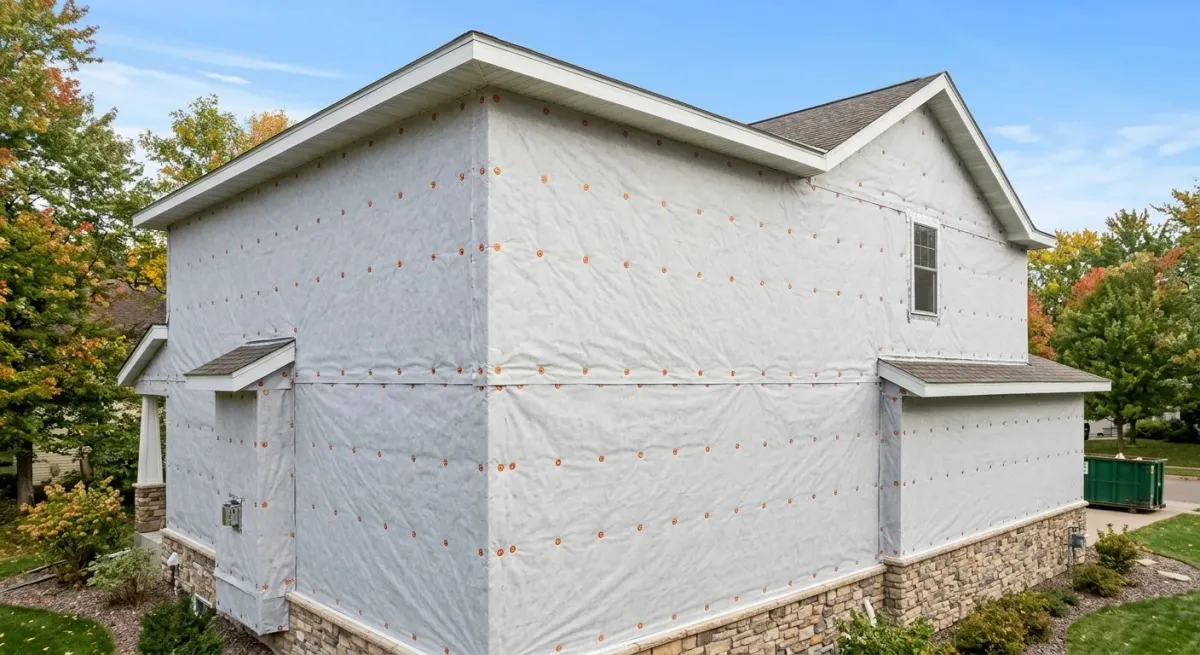
House exterior wrapped in white moisture barrier with orange fasteners securing it to wall sheathing during vinyl siding inst

Vinyl Over Existing Siding: When It Works and When It Doesn't

Homeowners ask about overlaying vinyl directly over existing wood siding. Sometimes it's a reasonable call. Usually it isn't. If the existing wood is sound, flat, and free of rot, an overlay can work and saves the labor of full removal. But if there's any moisture damage, warping, or soft spots, you're sealing a problem behind new material. That problem won't stay quiet. It'll cost more to fix later than it would have cost to remove the old siding upfront. Ramsey's housing stock is old. Many homes were built in the 1920s through 1950s, and original wood siding on a 70-year-old house has usually absorbed decades of freeze-thaw cycles. We inspect the existing material before any conversation about overlay versus full replacement. If the wood is compromised, we tell you. We won't recommend a shortcut that comes back on you in a few years. For homes in Ramsey's historic districts, the approach also has to account for Historic Preservation Commission guidelines. Some districts restrict material choices or require specific profiles. We've worked on exteriors across the metro and know to check district requirements before material selection, not after. See our full siding installation services for more on what the process looks like from the first call to the final walkthrough.

How Ambassador Approaches a Vinyl Siding Job

Assess, then plan

Mike or his crew walks the exterior before any proposal. Substrate condition, existing flashing, window and door situation, any signs of water intrusion. The assessment drives the scope, not the other way around.

Prep the wall correctly

Old material comes off. Damaged sheathing gets replaced. House wrap goes on with lapped seams, sealed penetrations, and proper flashing at every opening. This is the work that determines how the job holds up in year ten.

Install to code and manufacturer spec

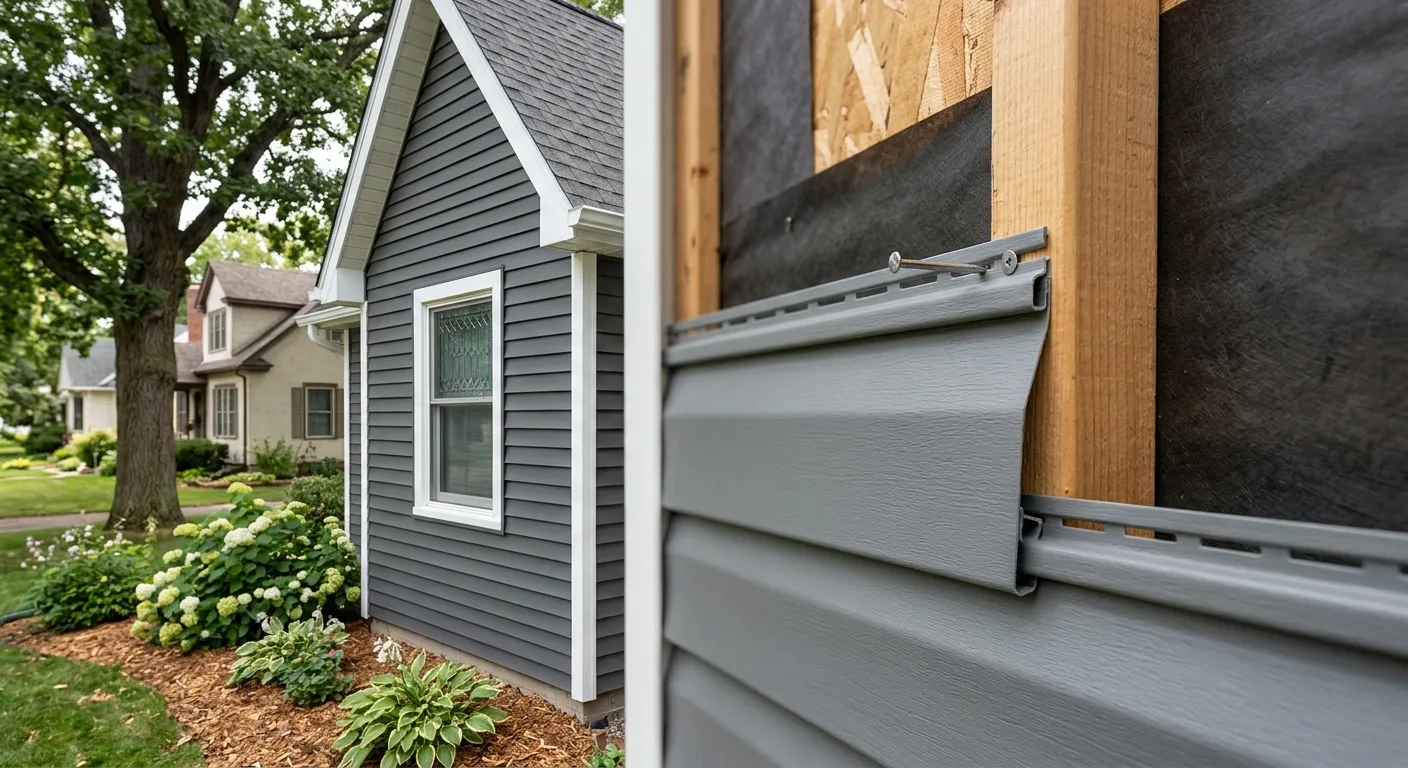
Panels are nailed with the right nail size, into the stud, with the slot centered so the panel can move. Mike has been teaching proper installation techniques to contractors across the country. This crew doesn't improvise on the fundamentals.

Minnesota Climate and What It Demands from Vinyl Siding

Vinyl expands and contracts more than most exterior materials, and Minnesota gives it a full workout. A single January-to-July temperature swing in the Twin Cities can move a panel a quarter inch or more. That's normal behavior. The installation has to account for it from the start. Panels nailed too tightly buckle and ripple in summer heat. Panels cut too short in cold weather gap visibly once they warm up. Neither is a material failure. Both are installation errors. We've been doing this work in Minnesota long enough to know that the specs written on a panel box are written for the full range of conditions the material will see, not just moderate ones. We follow them, including the ones most crews skip because they add time. For timing: spring and fall are ideal installation seasons in this climate. Installing in extreme cold affects how vinyl handles and seals. We factor seasonal conditions into scheduling, not just workload.

Why Mike's Crew, Not a Franchise

34 years in the trade. Licensed in Minnesota (MN: BC810034). Every job inspected by the owner.

Licensed MN Residential Building Contractor
License MN: BC810034, verifiable with the state
In business since 2000, in the trades since 1992
Mike started as an installer, not a salesman
No subcontracting on exterior work
The crew you meet is the crew that installs your siding
Code-compliant installation with proper water management details
Not just code-minimum. The details that keep warranties valid.

Serving Ramsey and the Northwest Metro

Ambassador Exteriors works across the Twin Cities metro and surrounding communities. If you're outside Ramsey proper, we likely cover your area. Call (763) 280-4920 to confirm and schedule a site visit.

Ready to Talk About Your Siding?

Call Mike directly at (763) 280-4920. You'll talk to the contractor who owns the company, not a scheduler. If you're also looking at window replacement or gutter installation while the exterior is open, we can scope the whole project in one visit.

Frequently asked questions

What do you put under vinyl siding before installation?
At minimum, a continuous house wrap or felt paper goes on before any siding panel. The house wrap laps from top to bottom so water sheds out, not in. At all openings and penetrations, it gets flashed and taped. On older homes or where energy performance matters, rigid foam insulation board goes between the sheathing and the wrap. Skipping the moisture barrier is the single most common installation shortcut, and it's one we won't take.
Can you put vinyl siding directly over wood siding?
Sometimes, but not always. If the existing wood is flat, structurally sound, and free of rot or moisture damage, an overlay can work. The problem is that most wood siding on older Ramsey homes has seen enough freeze-thaw cycling that soft spots and hidden rot are common. We inspect before recommending. Installing vinyl over rotted wood just seals moisture in and accelerates the decay behind the new panels.
What happens if you put vinyl siding over rotted wood?
The rot continues. Vinyl is not airtight, and moisture still moves through the wall assembly. Rotted sheathing or framing behind the siding will keep deteriorating, and eventually the new siding loses its nailing base. What would have been a straightforward sheathing repair before installation becomes a full tear-off and structural repair after.
Is it better to screw or nail vinyl siding?
Nails are standard and correct for vinyl siding. Roofing nails or siding nails, 1.25 to 1.5 inches in length depending on the substrate, driven into the stud. Screws can work but they're more likely to restrict panel movement if they're not set with enough clearance in the slot. The manufacturer spec determines the fastener type for each product, and we follow it.
How does Minnesota's climate affect vinyl siding installation and longevity?
Primarily through thermal expansion and contraction. Minnesota's temperature range is among the widest of any populated region in the country. A panel installed correctly in October needs to handle both minus 20 in January and 95 in July. That's a 115-degree swing. Proper nail placement and correct panel overlap at joints account for this movement. Installers who haven't worked through a full Minnesota winter often haven't dealt with that range.
What are the steps in a professional vinyl siding installation?
Start with a full inspection of the substrate. Remove existing material, repair any damaged sheathing or framing, then install house wrap with properly lapped seams and flashing at every opening. Set a level starter strip at the base of the wall, then install panels course by course, nailing correctly so each panel can move. Trim at corners, windows, and doors gets installed as you go, not at the end. Final walkthrough confirms every penetration is sealed and every course is locked.
What should be at the bottom of vinyl siding?
A starter strip goes on first, at the base of the wall, level across the entire foundation line. The first siding panel locks into it. The starter strip also establishes the angle and reveal for every course above it, so getting it level and properly fastened matters for the entire job. It also needs to be positioned so the bottom edge of the first panel clears the foundation without trapping debris or moisture against the wall.

Related

Next step

Tell us about the job

Your name, your number and what needs doing. A person from Ambassador Exteriors gets back to you.

Rather talk now?(763) 280-4920mike@ambassadorexteriors.com

No obligation


By submitting this form you agree that we may contact you about your request and share your name and email address with partner companies for email marketing. We never share your mobile number or text message consent with third parties or affiliates for marketing or promotional purposes.